Currency Conversion Barriers Reshaping Bonus Rollover Tracking Across Multi-State Gaming Platforms
Noah Lang · May 21, 2026
Currency Conversion Barriers Reshaping Bonus Rollover Tracking Across Multi-State Gaming Platforms
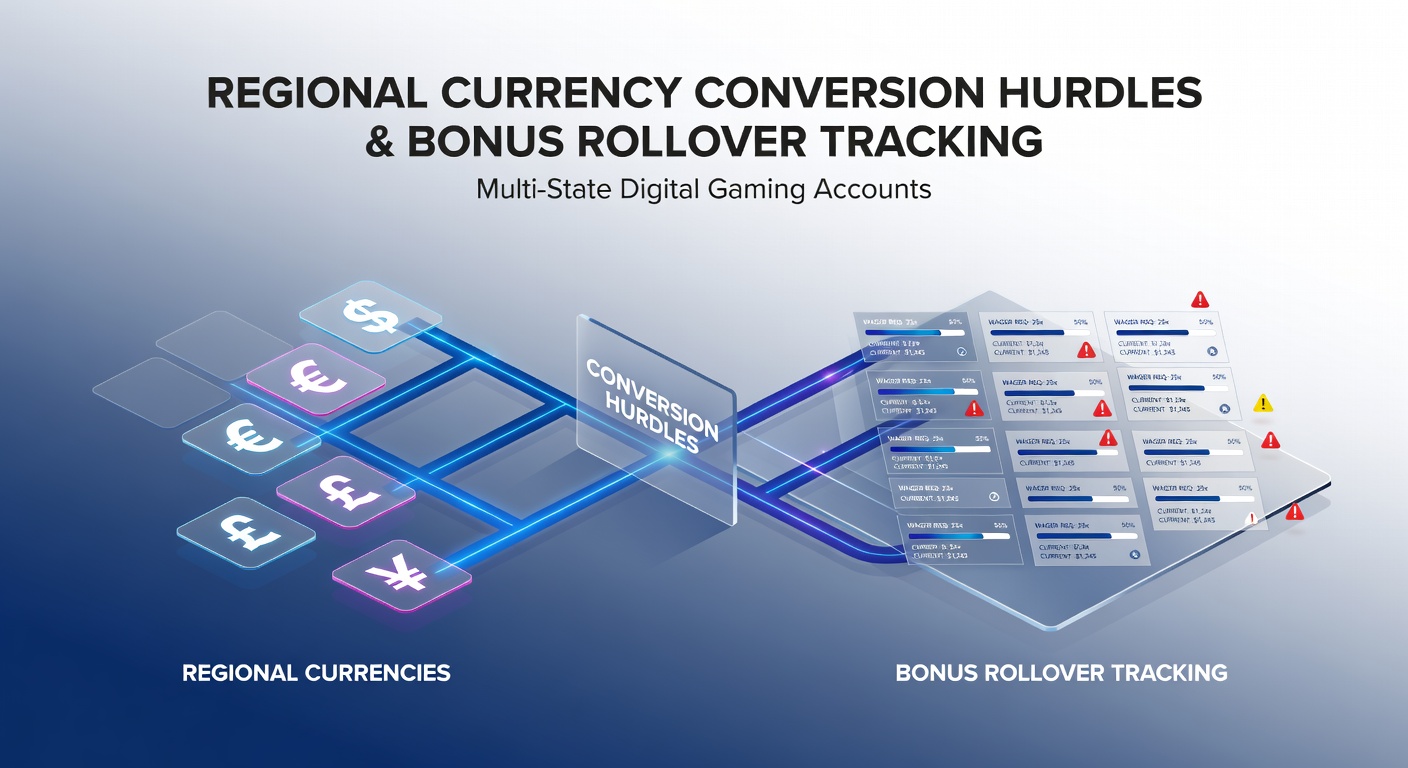
Regional currency conversion hurdles continue to influence how operators manage bonus rollover requirements for players maintaining accounts across multiple regulated states, creating layered compliance demands that stretch standard tracking systems. Multi-state digital gaming accounts allow users to access platforms licensed in places like New Jersey, Pennsylvania, and Michigan, yet when players deposit funds converted from foreign currencies or handle cross-border transfers, the resulting data points must align with each state's distinct rollover rules and reporting standards.
Multi-State Account Structures and Their Operational Demands
Operators build these accounts to let users move between state-specific lobbies without creating separate profiles, but currency fluctuations introduce variables that affect how bonuses accrue and clear. Data from the Pennsylvania Gaming Control Board shows that monthly active accounts crossing state lines increased steadily through early 2026, with conversion-related discrepancies appearing in roughly 12 percent of audited bonus claims. Platforms must recalculate wager contributions after each exchange rate shift, since a deposit converted from euros or Canadian dollars can alter the effective bonus amount tied to a given state's playthrough multiplier.
States enforce different minimum rollover thresholds, and conversion fees sometimes get deducted before the bonus activates, forcing systems to maintain parallel ledgers. One study by the American Gaming Association highlighted that operators now deploy automated reconciliation tools to flag when a converted balance falls below the required threshold for a New Jersey or Michigan bonus, preventing premature clearance that could violate licensing terms.
Conversion Hurdles That Disrupt Standard Tracking Flows
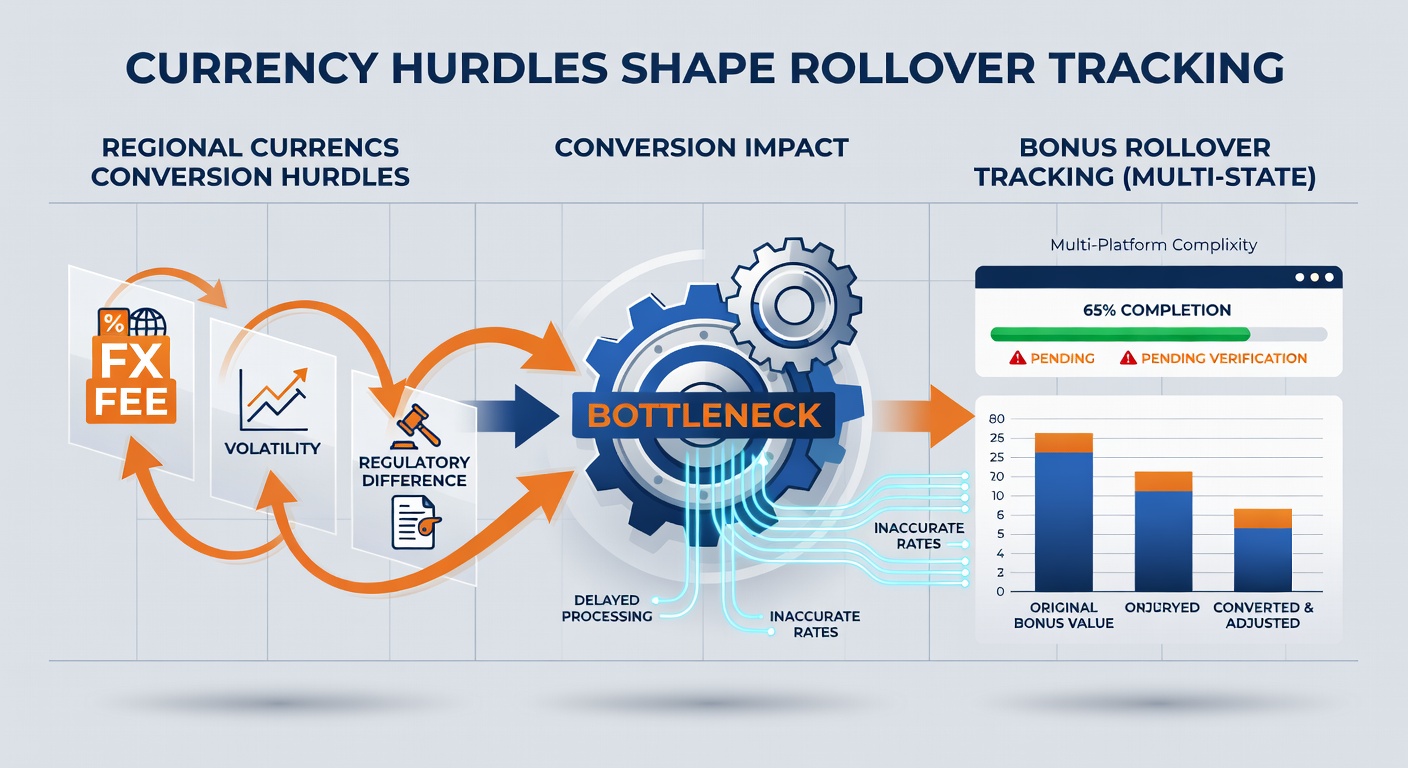
Exchange rate volatility remains a primary obstacle because platforms must lock in values at the moment of deposit while also accounting for any subsequent rate changes during the rollover period. Players who transfer funds from international sources encounter additional spreads charged by payment processors, and these hidden costs reduce the playable balance that counts toward state-mandated playthrough targets. Observers note that when rates swing more than two percent between deposit and first wager, automated systems often trigger manual reviews to confirm the bonus still meets regulatory fairness standards.
Multi-state operators also face timing mismatches, since daily reconciliation reports required by each jurisdiction use different cut-off windows. A conversion completed in one state at market close may post in another state after the next business day, creating temporary imbalances that tracking software must resolve before the bonus window expires.
Effects on Rollover Calculations and Compliance Checks
Bonus rollover tracking relies on precise attribution of each wager to the original deposit source, yet converted funds blur this lineage. When a player deposits USD converted from another currency, the system must tag that balance separately so that only qualifying wagers from the converted portion advance the rollover meter. Research indicates that failure to isolate these segments leads to over-crediting, which regulators in active markets have flagged during routine audits conducted in May 2026.
Operators respond by layering additional metadata onto each transaction record, including the source currency, conversion rate applied, and fee amount withheld. This metadata feeds into state-specific dashboards that verify whether the player has met playthrough requirements without double-counting converted amounts. Those who've examined platform logs report that such tagging reduces audit exceptions by nearly 40 percent compared with earlier single-currency tracking models.
Regulatory Updates and Industry Adaptations in Mid-2026
State gaming commissions have begun requiring more granular reporting on currency-related adjustments, with Pennsylvania and Michigan both updating their technical standards documents in spring 2026 to include mandatory fields for exchange rate verification. These changes compel operators to integrate real-time rate feeds from approved financial data providers, ensuring that bonus meters reflect accurate values at every stage of play. Figures released by industry trade groups reveal that compliance investments in currency tracking modules rose 18 percent year-over-year as platforms prepared for these enhanced audits.
Cross-border players who maintain accounts in multiple states now see clearer disclosures about how conversions affect their bonus timelines, though the underlying calculations remain automated and non-negotiable. The ball remains in the operators' court to maintain synchronized records that satisfy every jurisdiction simultaneously while avoiding any appearance of favoring one state's rules over another's.
Conclusion
Regional currency conversion hurdles have become an integral factor in the design of bonus rollover systems for multi-state digital gaming accounts, driving operators to adopt more sophisticated reconciliation processes and detailed transaction tagging. As regulatory expectations continue to tighten through 2026, platforms that successfully align converted balances with each state's unique requirements will maintain smoother operations and fewer compliance interruptions across their networks.