How Regional License Variations Alter Payout Processing Speeds in Networked Live Gaming Sessions
Noah Lang · Jul 6, 2026
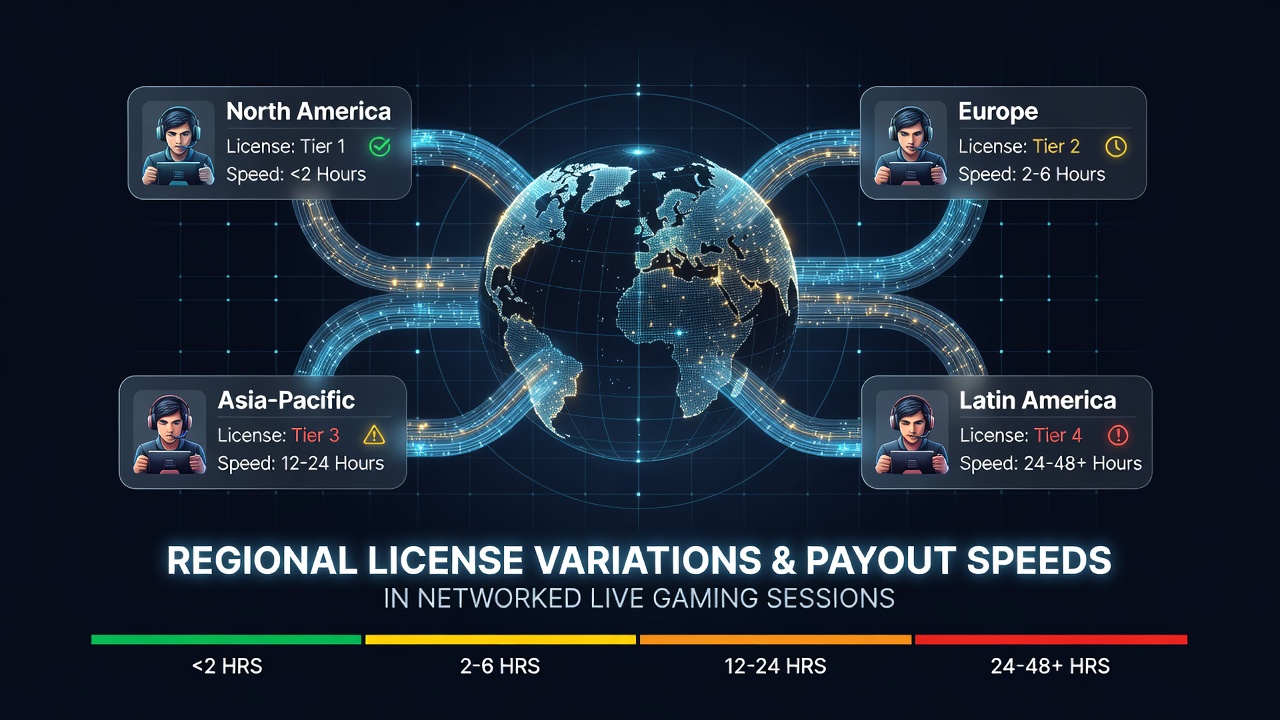
How Regional License Variations Alter Payout Processing Speeds in Networked Live Gaming Sessions
Regional gaming licenses create distinct compliance layers that directly influence how quickly payouts move through networked live gaming sessions and operators must navigate these differences when connecting across state or national boundaries. Each jurisdiction imposes its own verification protocols, banking integration rules, and reporting requirements which stretch or compress processing timelines depending on the license in force at the time of play.
Core Mechanisms Behind License-Driven Delays
Live dealer platforms operating across multiple licenses route player withdrawals through sequential checks that align with the strictest applicable rule set and this routing often adds minutes or hours to standard processing windows. A session initiated under one license may trigger additional identity confirmation steps when funds attempt to exit under a secondary jurisdiction's oversight while platforms built on unified ledgers still pause at each regulatory gate before releasing credits.
Data from multi-state operators shows that sessions crossing into regions with enhanced anti-money laundering thresholds experience average payout extensions of 18 to 42 minutes compared with single-license environments and these extensions compound when live tables connect players from three or more jurisdictions simultaneously. Observers note that automated systems flag cross-border transactions for manual review more frequently when licenses differ in their customer due-diligence frequency mandates.
Examples from Key Regulatory Zones
In the United States, New Jersey's Division of Gaming Enforcement requires real-time transaction logging that feeds directly into state servers while neighboring Pennsylvania applies batch reporting cycles that allow faster internal movement before external verification occurs. Operators bridging these two markets therefore schedule live session payouts to align with the slower cycle to avoid split-state holds and this scheduling becomes visible to players as consistent processing windows that shift by time of day.
Across the Atlantic, Malta's licensing framework emphasizes centralized player fund segregation which integrates smoothly with certain EU banking partners yet creates friction when networked sessions include participants from jurisdictions using different segregation models. Research from European gaming technology consortia indicates that these model mismatches contribute to a measurable slowdown in live roulette and blackjack payout queues during peak evening hours when cross-network volume peaks.
New Jersey Division of Gaming Enforcement publishes monthly compliance summaries that track average payout intervals by license type and similar reports from Australian state regulators reveal parallel patterns where license variations alter how quickly winnings clear in multi-state live poker networks.Impact on Live Session Dynamics in Mid-2026
By July 2026 several interstate data-sharing agreements had expanded to include live dealer transaction metadata and these expansions forced operators to insert additional reconciliation steps before releasing funds from sessions involving players in newly linked jurisdictions. The added steps appear as brief pauses during cash-out requests rather than outright blocks yet they extend the overall time from bet resolution to bank credit by measurable margins.
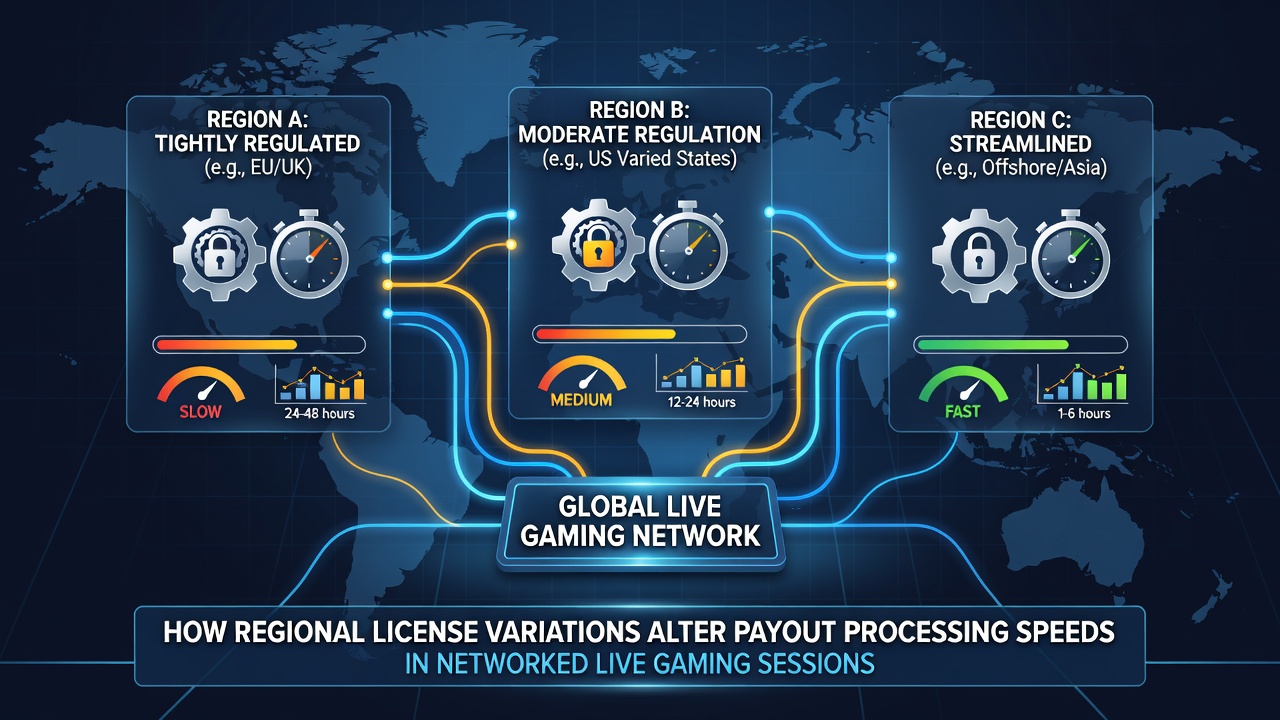
Network architects respond by deploying predictive routing algorithms that pre-stage verification documents according to the license mix of active tables and these algorithms reduce but do not eliminate the extra latency introduced when a high-volume blackjack table draws players from license zones with divergent record-retention periods. Players notice the effect most during progressive side-bet payouts that must satisfy every participating license before distribution.
Technical Adjustments Operators Implement
Platforms adjust their payout engines to queue transactions according to the most restrictive license present in a given session and this queuing logic prevents regulatory conflicts while creating predictable patterns in processing speed. Sessions dominated by a single fast-processing license clear winnings in under 90 seconds on average whereas mixed-license tables require layered approvals that stretch the same transaction across several minutes.
Banking partners also maintain separate integration pathways for each license type and switching between pathways adds overhead that compounds when live gaming networks route funds through multiple payment rails within one withdrawal request. Industry reports document that operators using unified APIs still encounter license-specific rate limits on transaction frequency which further modulates how quickly successive live session payouts can occur.
Conclusion
Regional license variations continue to shape payout processing speeds in networked live gaming sessions through compliance sequencing, verification thresholds, and banking integration differences and these factors produce measurable variations in how quickly players receive winnings across jurisdictions. Operators track these effects through internal metrics while regulatory bodies publish aggregate data that confirms the ongoing influence of license frameworks on transaction timelines. As data-sharing agreements evolve the technical adjustments required to maintain compliance will keep altering the pace at which live gaming payouts move from table resolution to final credit.