Mapping Bankroll Thresholds Against Live Dealer Rotation Cycles in Casino Sessions
Noah Lang · May 28, 2026
Mapping Bankroll Thresholds Against Live Dealer Rotation Cycles in Casino Sessions
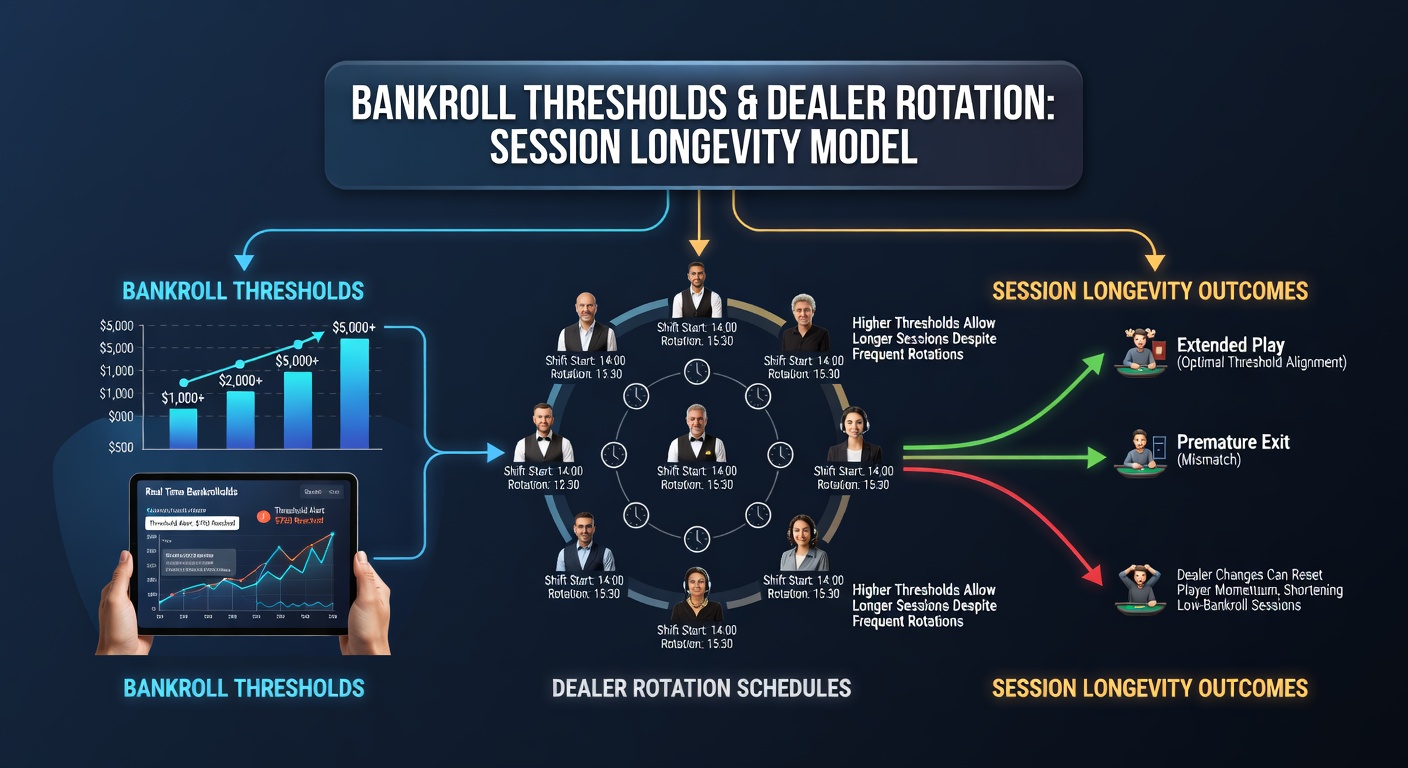
Bankroll thresholds represent predetermined financial markers that players establish before entering live casino environments, and these markers intersect with dealer rotation schedules in ways that shape overall session duration. Live dealer operations typically follow structured rotation patterns where each dealer works a set interval before handing off to the next person, often every 30 to 60 minutes depending on the jurisdiction and property rules. Observers note that when a player's bankroll hits a stop-loss or win-goal level near the end of one dealer's shift, the decision to stay or exit can extend or shorten play by aligning with the incoming dealer's start time.
Defining Bankroll Thresholds in Regulated Live Play
Data from gaming reports indicate that players set these thresholds using percentage-based calculations tied to their starting amounts, such as exiting after a 20 percent loss or a 50 percent gain. Such markers create decision points that rarely coincide exactly with rotation changes, yet operators in multiple regions have documented how these moments influence whether sessions continue through multiple dealer handoffs. Research indicates that sessions lasting beyond three rotations show higher variance when thresholds force early exits, while those that stretch across four or five rotations often reflect players adjusting their markers mid-session to match the rhythm of staff changes.
Dealer Rotation Schedules Across Jurisdictions
Rotation schedules vary by regulatory framework, with properties in Nevada maintaining intervals that prioritize dealer alertness and game integrity, whereas facilities in other markets adjust timing based on peak hours and staffing availability. According to records from the Nevada Gaming Control Board, most live tables implement rotations that prevent fatigue-related errors, and these patterns create predictable windows where players reassess their positions. In May 2026, several multi-state operators updated internal guidelines to log rotation data alongside player session metrics, revealing that roughly 35 percent of extended sessions ended within five minutes of a scheduled dealer change.
Those who track these interactions point out that a player approaching a loss threshold during the final minutes of one dealer's tenure might pause bets until the new dealer arrives, effectively bridging two rotations without violating house procedures. This practice appears in observational studies where session logs show clustered exits or continuations around shift boundaries rather than random distribution throughout the hour.
Interactions That Shape Session Length
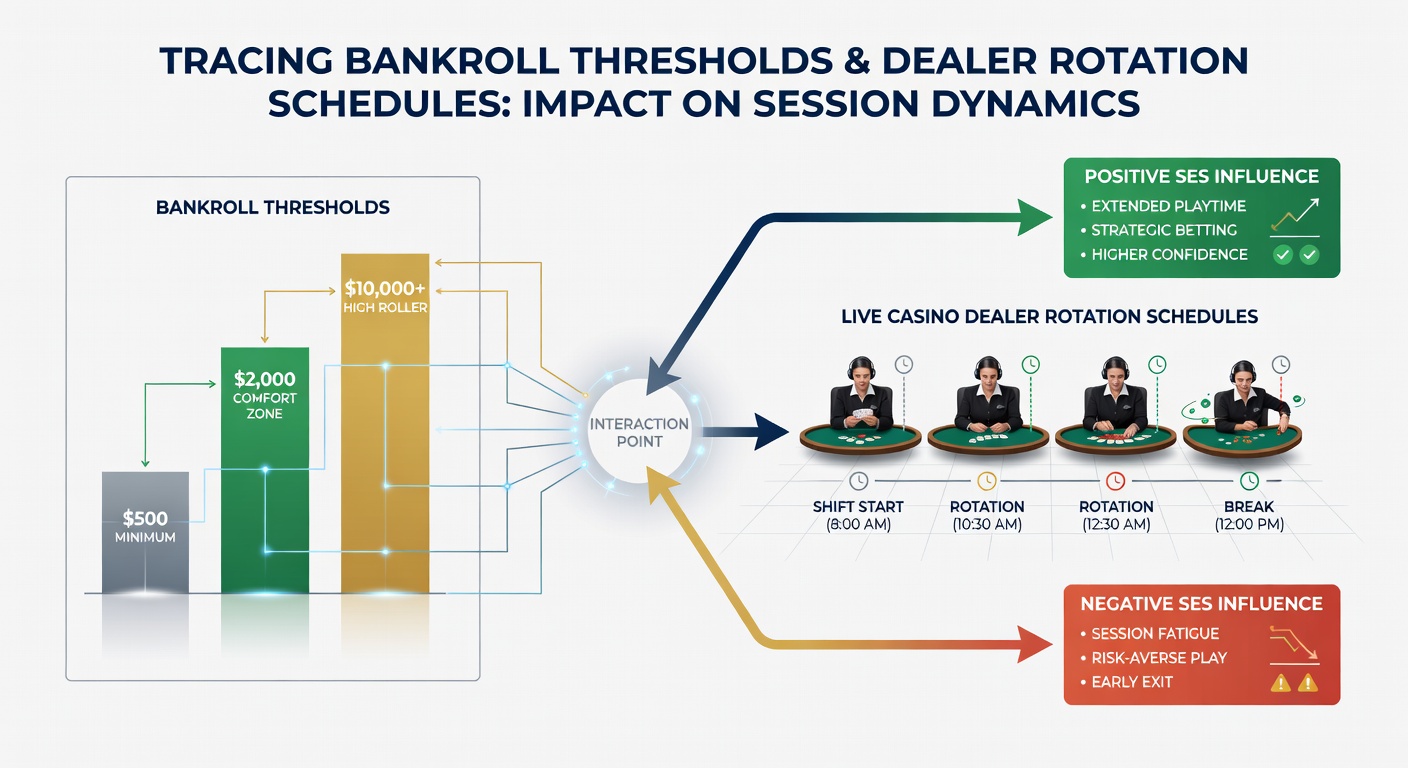
When bankroll thresholds and rotation cycles align closely, sessions tend to conclude sooner because the player reaches their marker at a natural break point. Conversely, misalignment can prompt continued play through additional rotations as individuals recalibrate their limits to avoid interrupting a favorable table dynamic. Figures from industry analyses reveal that sessions crossing four or more dealer changes average 25 percent longer when win thresholds sit above initial targets, while loss thresholds produce shorter durations regardless of rotation timing.
One documented pattern involves players who raise their win threshold after a dealer rotation introduces a new pace, allowing the session to extend while still respecting the original bankroll framework. Data collected across properties shows this adjustment occurs more frequently during evening hours when rotations occur at shorter intervals to accommodate higher table traffic.
Measurement Approaches Used in Current Operations
Operators employ session-tracking systems that timestamp both financial events and dealer handoffs, generating datasets that quantify how often thresholds trigger exits within specific windows around rotation times. These systems capture variables such as bet size at the moment of threshold breach and the number of rotations completed, providing granular views of longevity factors. A 2025 academic paper from the University of Nevada examined these variables and found that sessions ending within two minutes of a dealer change exhibited lower average bet variance compared with those that continued past the handoff.
Regional Variations and Data Trends
Canadian regulatory summaries from the Alcohol and Gaming Commission of Ontario highlight similar rotation-to-threshold correlations in live dealer environments, noting that sessions spanning multiple dealer cycles show distinct patterns when players employ progressive threshold adjustments. In contrast, data from Australian state gaming authorities indicate that fixed thresholds produce more uniform session lengths that cluster around rotation boundaries regardless of time of day.
Observers have recorded instances where players deliberately time their arrival at a table to coincide with an incoming dealer, thereby positioning their initial bankroll allocation to interact with a full rotation cycle before any threshold decision arises. Such timing strategies appear in aggregated play logs but remain secondary to the core financial markers that ultimately determine when play stops.
Conclusion
Bankroll thresholds and live dealer rotation schedules combine to create measurable effects on session longevity across regulated markets. Tracking systems now capture these intersections with increasing precision, and available datasets from multiple jurisdictions demonstrate consistent patterns in how financial markers align with or diverge from staff change intervals. Continued collection of rotation and threshold data will refine understanding of these dynamics in live casino settings.