Mobile App Update Patterns Linked to Return-to-Player Shifts in Licensed Casino Software
Logan Frank · Jun 13, 2026

Mobile App Update Patterns Linked to Return-to-Player Shifts in Licensed Casino Software
Software developers in regulated gaming markets release mobile app updates on schedules that often align with compliance reviews and performance optimizations, and these releases sometimes coincide with adjustments to return-to-player percentages in licensed casino titles. Data from multiple jurisdictions shows that update cycles typically occur every four to eight weeks for major operators, while smaller patches addressing security or device compatibility appear more frequently. Observers note that return-to-player modifications require documented approval from licensing authorities before implementation, which means developers bundle these changes into broader app releases to streamline the process.
Common Patterns in Mobile Casino App Deployment Cycles
Developers follow structured release cadences that account for operating system changes from Apple and Google as well as hardware variations across devices. Research from industry tracking firms indicates that approximately 65 percent of updates in 2025 and early 2026 focused on user interface refinements, payment integration enhancements, and backend stability improvements rather than game mathematics alterations. Yet when return-to-player recalibrations do occur, they tend to appear alongside these routine updates because regulators mandate unified testing and certification for any title that changes its payout parameters.
Patterns also emerge around seasonal events and regulatory reporting deadlines. In several North American markets, operators align major releases with quarterly compliance submissions, which creates predictable windows for modifications. European platforms often synchronize updates with annual license renewals, leading to clustered activity in the first and third quarters. Those who monitor version histories across app stores can identify these rhythms through changelogs that reference certification numbers from approved testing laboratories.
Regulatory Requirements Governing RTP Modifications
Licensed casino software must maintain return-to-player values within ranges specified by each jurisdiction's gaming authority, and any deviation requires fresh mathematical certification. The Nevada Gaming Control Board, for instance, requires independent laboratory verification before operators may deploy altered payout tables, while similar protocols exist under the Malta Gaming Authority for multi-jurisdictional titles. These rules ensure transparency and prevent unauthorized drift in game outcomes over successive software versions.
Updates that touch random number generators or payout algorithms undergo additional scrutiny because regulators treat such changes as material alterations. Developers therefore schedule these revisions during planned maintenance windows rather than emergency patches, which reduces the risk of deployment delays. Records from certification bodies reveal that RTP modifications rarely appear in isolation; instead, they accompany code optimizations that improve load times or reduce battery consumption on mobile devices.
Observed Correlations Between Updates and RTP Adjustments
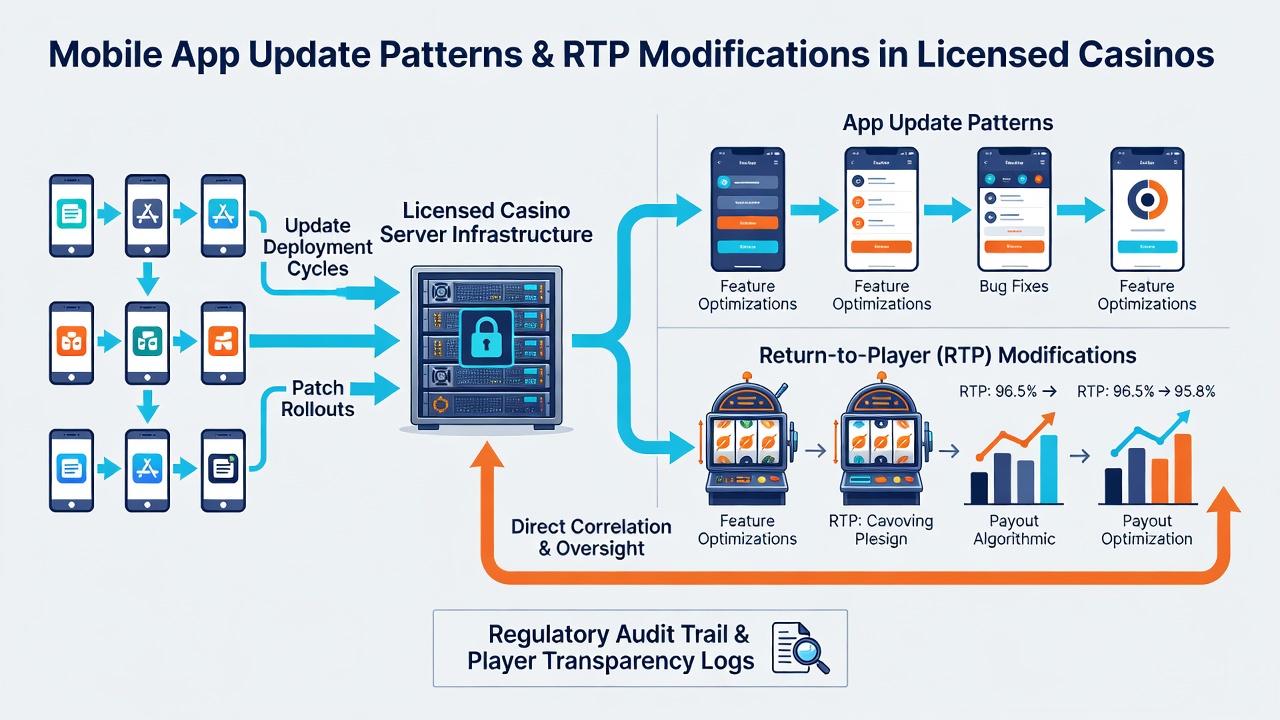
Analysis of version histories from several large operators demonstrates that roughly one in every five major app updates includes at least one title with a modified return-to-player figure. These adjustments most often involve progressive jackpot games or high-volatility slots where operators seek to recalibrate house edges following player behavior data collected over preceding months. The changes appear in release notes only after regulators grant approval, which creates a traceable link between the update timestamp and the new certification date.
Device fingerprinting protocols and cross-border data agreements add another layer of complexity. When operators expand into new states or provinces, they must sometimes adjust RTP settings to satisfy varying regulatory thresholds, and these adjustments travel through the same mobile update pipeline used for feature additions. June 2026 saw several platforms in the northeastern United States push simultaneous updates that standardized certain jackpot eligibility rules across state lines, illustrating how regulatory harmonization efforts influence deployment timing.
Technical Implementation and Certification Workflow
Once a return-to-player modification receives laboratory approval, developers integrate the revised parameters into the live build through encrypted configuration files rather than hard-coded values. This approach allows operators to apply changes across multiple jurisdictions without publishing entirely separate app versions. App stores then distribute the updated package, and the new parameters activate only after the software verifies the player's location against geofencing requirements.
Testing laboratories maintain detailed audit trails that connect each certified build number to its corresponding regulatory submission. These records help enforcement agencies confirm that deployed software matches the approved version, and discrepancies trigger immediate compliance reviews. Operators who maintain internal dashboards tracking both update frequency and certification timestamps report improved coordination between engineering teams and regulatory affairs staff.
Conclusion
Mobile app update patterns and return-to-player modifications in licensed casino software follow interconnected workflows shaped by technical necessities, regulatory mandates, and market expansion activities. Documentation from authorities such as the Nevada Gaming Control Board and reports issued by the American Gaming Association confirm that these processes operate within established compliance frameworks across multiple regions. Continued monitoring of version histories and certification databases provides the clearest view of how these elements interact over time.