Regional Tax Structures and Their Influence on Bankroll Allocation Tactics for Table Games
Logan Frank · Jul 18, 2026

Regional Tax Structures and Their Influence on Bankroll Allocation Tactics for Table Games
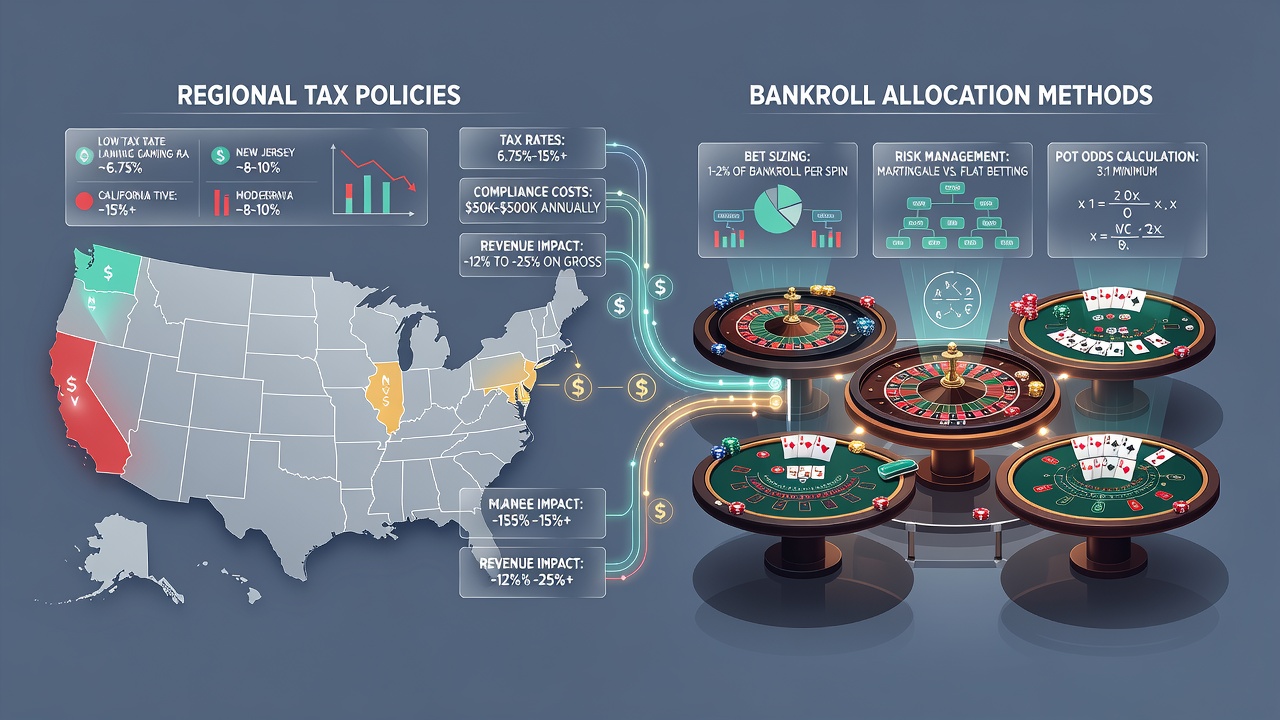
Regional tax policies create distinct frameworks that shape how players approach bankroll allocation during table game sessions, and observers note that these variations often determine the sustainability of extended play across different jurisdictions. Data from multiple gaming authorities shows that jurisdictions impose taxes on winnings at rates ranging from zero in some areas to over 50 percent in others, which directly influences the net amounts available after each session and requires adjustments in how bankrolls get divided among bets on games like blackjack, roulette, and baccarat.
Understanding Tax Policy Variations Across Key Markets
Tax rules differ sharply between major gaming regions, and those who've examined regulatory filings find that the United States applies federal income tax to gambling winnings above certain thresholds while individual states add their own layers in places like Pennsylvania and New Jersey. Research indicates that European countries such as France and Italy levy specific gaming levies that reduce player returns, whereas several Australian states treat casino winnings as tax-free for individuals yet impose operator-level taxes that indirectly affect promotional structures and session lengths. Canadian provinces follow a similar pattern where provincial rules interact with federal guidelines, creating a patchwork that players must navigate when planning bankroll distribution for table games with varying house edges and volatility levels.
Figures from July 2026 reveal continued growth in multi-state online platforms that must comply with interstate data agreements, and this compliance adds another dimension because tax reporting requirements often tie into eligibility for progressive jackpots and bonus structures. Experts have observed that these agreements streamline verification but also expose players to consistent tax tracking across borders, which means bankroll methods developed for one region may require recalibration when sessions span multiple tax zones.
Bankroll Allocation Methods Tailored to Tax Environments
Effective bankroll allocation begins with assessing the after-tax value of potential winnings, and researchers discovered that players in high-tax regions often reserve larger portions of their total funds for variance buffers on table games known for streaks and swings. A common approach involves segmenting the bankroll into units sized at 1 to 2 percent of the total for each bet, yet this percentage shifts upward in jurisdictions where taxes claim a substantial share of payouts because the remaining capital must still cover the same number of decisions before reaching a target session length.
Those who've studied allocation patterns note that low-tax or no-tax environments allow tighter unit sizing since net retention stays higher, while high-tax areas benefit from wider spreads that account for reduced take-home amounts. Data shows that roulette players, for instance, adjust their even-money bet allocations more aggressively than blackjack participants because the game's higher variance combines with tax deductions to accelerate bankroll depletion when not properly scaled. And in poker settings where skill influences outcomes, allocation models incorporate expected value calculations that factor in regional tax rates on tournament prizes and cash game wins alike.
Practical Interplay in Session Planning
Session planning integrates tax considerations at the outset, and evidence suggests that players map out expected tax liabilities before determining stop-loss and stop-win points for each table game outing. In regions with progressive tax brackets, larger wins push portions of the bankroll into higher tax tiers, which prompts allocation methods that favor smaller, more frequent wins over rare large payouts to maintain consistent net returns. Observers note that this dynamic becomes especially relevant in July 2026 as new reporting tools roll out in several U.S. states, allowing real-time tax estimates that feed directly into mobile bankroll trackers used during live play.
Case examples from industry reports illustrate how a blackjack player operating under a 30 percent combined tax rate might allocate 25 percent more to their session bankroll than an identical player in a zero-tax jurisdiction to achieve the same number of hands before exhaustion. These adjustments extend to baccarat and craps as well, where commission structures and point spreads already introduce complexity that tax policies then multiply. What's interesting is how loyalty programs in certain markets offset some tax effects through tax-free comps, allowing players to stretch bankrolls without additional capital outlay.
Emerging Trends in Cross-Border Gaming and Tax Compliance
Cross-border platforms introduce further layers because currency conversion and data-sharing agreements alter how winnings get reported and taxed, and studies from academic sources indicate that these factors reshape traditional bankroll formulas. Players who move between platforms must track multiple tax bases simultaneously, which leads to hybrid allocation strategies that blend conservative unit sizing with dynamic reallocation based on realized tax impacts. According to Internal Revenue Service guidelines, accurate record-keeping remains essential for substantiating deductions, and this requirement encourages more precise bankroll segmentation from the start of each session.
Additional insights from state legislative analyses highlight ongoing shifts in how gaming revenues get distributed, which indirectly influences promotional bankroll boosts available to players. These boosts often come with their own tax implications that allocation methods must absorb without eroding core playing capital.
Conclusion
The interplay between regional tax policies and bankroll allocation methods continues to evolve as regulatory frameworks adapt to expanded gaming options, and data indicates that successful navigation requires ongoing awareness of both tax rates and game-specific variance. Players who integrate these elements into their planning maintain longer sessions and clearer visibility into net outcomes across diverse markets. Continued monitoring of policy updates through official channels supports refined allocation techniques that align with the specific tax environment of each jurisdiction.