Tracing Interconnected Risk Layers Across Multi-Device Gaming Sessions in Regulated Networks
Zara Keller · May 18, 2026
Tracing Interconnected Risk Layers Across Multi-Device Gaming Sessions in Regulated Networks
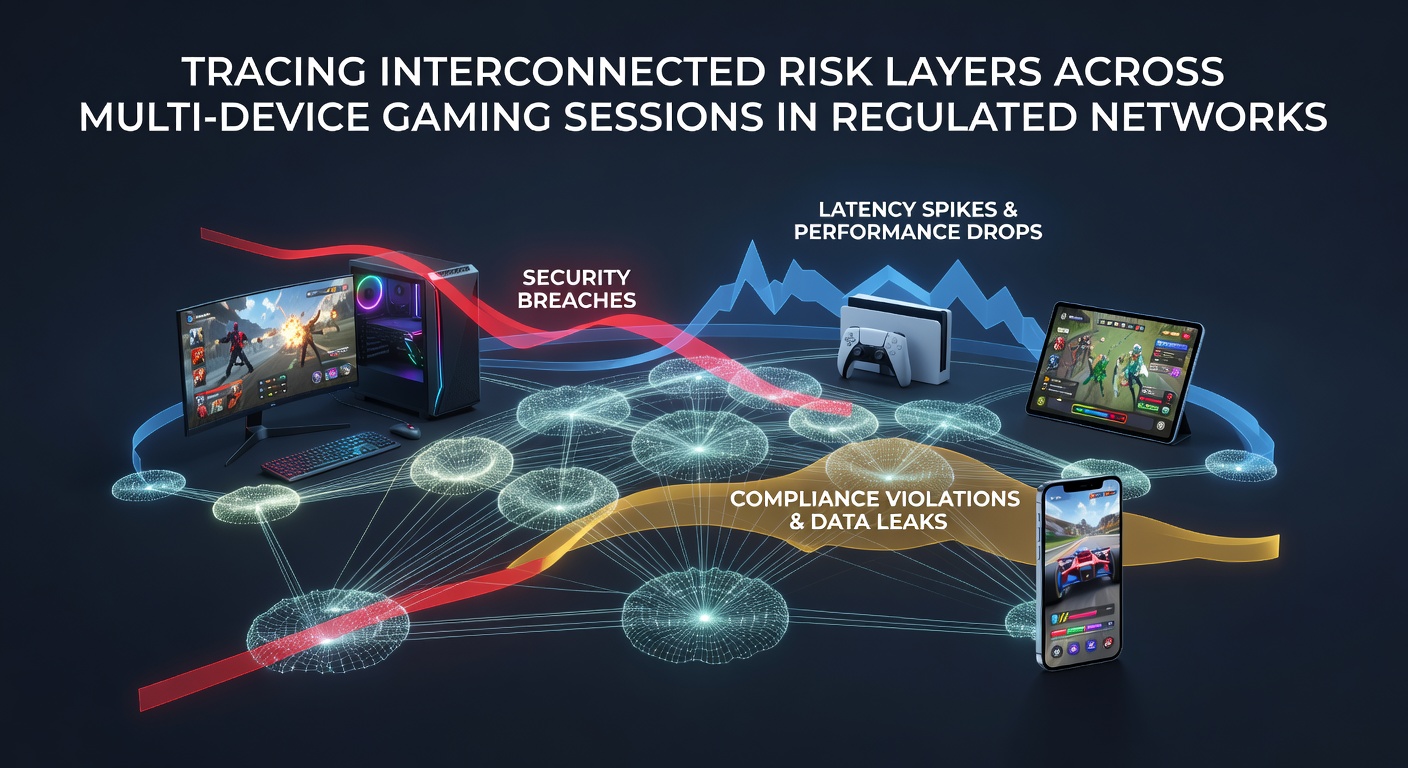
Regulated gaming environments now operate across smartphones, tablets, laptops and shared consoles, which means risk factors no longer sit in isolated silos but form overlapping layers that shift with every device switch or network hop, and operators must map these connections continuously to stay compliant.
Device Fingerprinting and Session Continuity
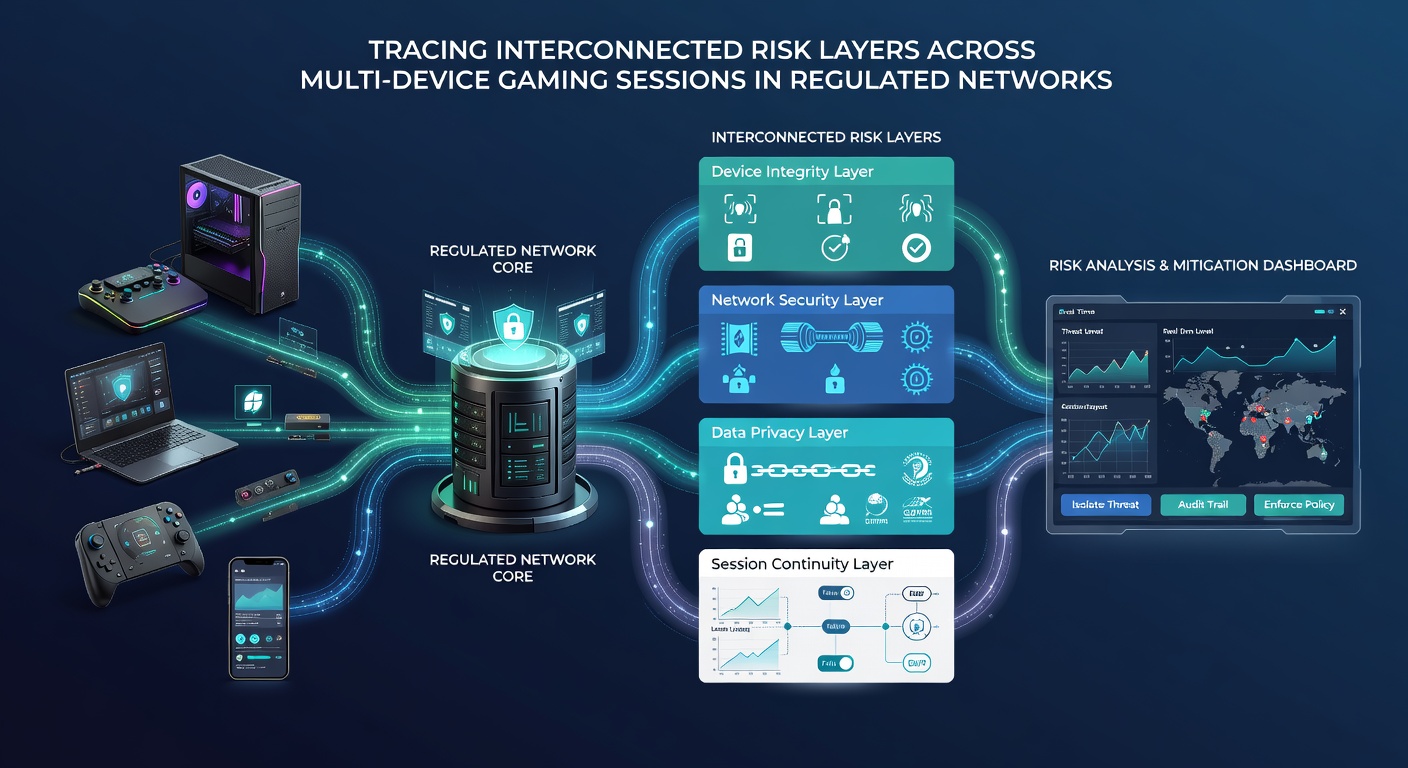
Operators collect hardware identifiers, browser signatures and behavioral biometrics to link separate logins into one persistent player profile, while regulators require that these linkages remain accurate even when a user moves from a home Wi-Fi connection to mobile data mid-session. In May 2026 several North American jurisdictions updated their technical standards to mandate real-time device reconciliation, requiring platforms to flag any mismatch in geolocation or hardware hash within seconds rather than minutes.
Layer One: Access Control and Authentication
Multi-factor authentication combines passwords with device-bound tokens and occasional facial or voice checks, yet each additional factor introduces its own data stream that must be reconciled against previous sessions without creating friction that drives players away. Research from academic centers studying human-computer interaction shows that excessive re-authentication prompts correlate with higher abandonment rates, so systems now rely more on passive signals such as typing cadence and swipe patterns that travel with the user across devices.
Layer Two: Transaction and Financial Monitoring
Deposit and withdrawal patterns are tracked through payment processors that share hashed account details with gaming platforms, allowing algorithms to detect velocity changes that might indicate money laundering or problem gambling. When a player initiates a large transfer on a desktop after smaller mobile deposits, the system cross-references IP history and device reputation scores to decide whether additional verification is needed before funds clear.
What's interesting is how these checks interact with responsible gaming tools; many jurisdictions now require operators to apply the same risk score across every device so that a self-exclusion set on a phone automatically blocks play on a linked tablet without requiring the player to contact support again.
Regulatory Reporting and Data Sharing
Authorities in different regions have begun standardizing the format of risk-event reports so that information gathered in one market can inform oversight in another. The New Jersey Division of Gaming Enforcement publishes aggregated monthly statistics on cross-device alerts that help smaller operators benchmark their own detection systems against statewide averages. Meanwhile, iGaming Ontario requires quarterly submissions that include device-switch frequency and any associated risk-score adjustments, creating a growing dataset that researchers use to refine predictive models.
Observers note that these shared datasets reduce duplication of effort; a pattern first identified in one province can trigger automated reviews across multiple platforms before the same issue escalates elsewhere. That said, privacy frameworks still limit how much raw player data crosses borders, so most exchanges rely on anonymized aggregates rather than individual profiles.
Technical Challenges in Real-Time Tracing
Latency remains a persistent issue when thousands of concurrent sessions generate overlapping risk signals every second. Systems must prioritize which events receive immediate human review and which can wait for batch processing, and the decision rules themselves become another layer that regulators audit. One study released by a European research consortium examined how small delays in device reconciliation allowed certain bonus abuse schemes to persist across mobile and desktop accounts for several hours before detection systems caught up.
Network segmentation and cloud-edge processing help mitigate these delays, yet they also create new points where data could be lost or mislabeled if synchronization protocols are not robust. Vendors now compete on the speed and accuracy of their reconciliation engines, marketing sub-second matching rates as a competitive advantage in licensing applications.
Future Directions and Standardization Efforts
Industry associations have formed working groups to draft common schemas for risk-event logging that would allow different software platforms to exchange alerts without custom integrations. Early pilots conducted in 2025 demonstrated that standardized fields for device type, connection method and risk category reduced false positives by nearly a third when operators pooled anonymized data. Regulators in multiple jurisdictions have signaled willingness to accept these common formats in future compliance filings, which could lower costs for smaller operators while improving overall network visibility.
Although full interoperability remains years away, incremental steps such as shared blocklists for high-risk device signatures already operate across several markets. These lists update daily and feed directly into login gateways, so a device flagged in one region triggers heightened scrutiny the next time that hardware attempts access anywhere the list is honored.
Conclusion
Tracing interconnected risk layers across multi-device gaming sessions demands continuous coordination between technology vendors, operators and regulators, and the frameworks developed in 2026 already show measurable improvements in detection speed and cross-border consistency. As more jurisdictions adopt unified reporting standards and shared device-reputation tools, the ability to follow risk signals through every device switch will become a baseline expectation rather than an advanced feature.